 ileegetarmas
Ethereum: How to calculate a hash of a Tx?
Ethereum Hash Calculation: A Step-by-Step Guide
The Ethereum network uses a unique algorithm to create and verify transactions (Tx). A key part of this process is the calculation of hashes, which are used to verify the integrity and authenticity of each transaction. In this article, we will explore how to calculate hashes on Ethereum, focusing specifically on Tx hashes.
What are hashes?
Hashes are one-way cryptographic functions that take input data (in this case, a transaction) as input and produce a fixed-size string output. A hash is unique and immutable, making it ideal for verifying the authenticity of a transaction.
Hash Calculation on Ethereum: A High-Level Overview
To calculate hash values on Ethereum, you need to follow these steps:
- Creating a Transaction: Start by creating a new Tx using the
txcommand from the Ethereum CLI:
eth TX create
Replace the string
- Double SHA-256 Hash: To create a hash, we need to double SHA-256 hash the input Tx data (including all variables). We do this using the
eth accountcommand:
eth account --send-receipt
This creates a new transaction with hashed-sha256 values.
- Final hash calculation
: The final hash is created by combining the two previous hashes (Tx and double-sha256 hash of the input data). This is done using the
eth hashcommand:
eth hash --tx_hash
This will output the final Tx hash.
Fields to double SHA Hash
To create a valid transaction, you must include the following fields in the Tx:
- From: The address that initiated the transaction.
- To: The address of the recipient of the funds (if any).
- Value: Amount to transfer (optional).
- GasPrice: The gas price for the transaction (optional).
- GasLimit: The maximum gas limit allowed for the transaction (optional).
Field Order
The order in which you include these fields does not matter. It is important that they are included in the correct format.
Example transaction
Here is an example Tx:
{
"from": "0x1234567890abcdef",
"to": "0x9876543210fedcba",
"value": 10,
"gas price": 20,000,
"gasLimit": 300,000,
"nonce": 0,
"BlockNumber": 1000
}
Double SHA-256 hash calculation
Using the eth account command, we can create double sha256 input data:
{
"from": "0x1234567890abcdef",
"to": "0x9876543210fedcba"
}
The result will be a new transaction with the same hash value.
Final hash calculation
Combining the two previous hashes, we get:
eth hash = `1234567890abcdef@1234a5b6c7d8e9f0g0h1i2j3k4l5m6n7p8q9r10t11u12v1613**cw
This is the final Tx hash.
Conclusion
Calculating hashes on Ethereum involves creating a transaction, double-sha256 hashing the input data, and then combining the two hashes to create a final hash. By following this process, you can verify the integrity and authenticity of every transaction on the Ethereum network.
ileegetarmas
Ethereum: Does Ripple allow one to issue their own currency?
Title: Can Ripple Issue Its Own Currency?
Introduction
Ripple is a digital payment system that has disrupted traditional financial transactions by enabling fast and cheap cross-border payments. While the underlying technology enables decentralized peer-to-peer transactions, many have wondered if it can be used as the basis for issuing its own currency. In this article, we explore whether Ripple enables the creation of an independent currency.
Background
Ripple was first developed in 2012 by Jed McCaleb and a group of other early investors, including Dan Larimer. The system is based on a consensus algorithm called Ouroboros, which ensures transactions are secure and tamper-proof. Ripple’s native cryptocurrency, XRP, was launched in October 2012 to enable cross-border payments.
Ripple’s Tokenization
In recent years, Ripple has been exploring the possibility of issuing its own token for use cases outside of digital payment systems. This concept is often referred to as a “tokenized currency” or “blockchain-based fiat.” The idea is that XRP can be used as an independent medium of exchange, similar to gold, without being tied to traditional financial institutions.
Can Ripple issue its own currency?
While it is not entirely clear whether Ripple can issue its own currency in the classic sense, there are some interesting developments and interpretations:
- XRP’s fiat-like status: XRP has been called a “fiat-based” token due to its decentralized nature and lack of a central authority controlling its value. This raises questions about whether it can be used as an independent currency.
- Tokenized assets: Ripple has been exploring the concept of tokenizing assets such as real estate or commodities, which could potentially lead to the creation of an independent currency.
- Ripple’s Smart Contracts: The company is working to integrate its own blockchain-based smart contracts with XRP to enable more complex and decentralized applications.
Challenges and Limitations
Despite these developments, there are significant challenges in implementing a standalone cryptocurrency like XRP:
- Regulatory Environment: Governments and regulators have been slow to recognize the potential of decentralized currencies, raising doubts about their legitimacy.
- Scalability Issues: Ripple’s current blockchain solution has limitations in terms of scalability that could affect its ability to support widespread adoption.
- Security and Stability: XRP faces risks related to security and stability, including market volatility and potential regulatory hurdles.
Conclusion
While Ripple has explored the concept of tokenizing assets and creating fiat-like status for XRP, it is important to acknowledge that this is not a straightforward process. The company will need to navigate complex regulatory environments, address concerns about scalability, and ensure security and stability measures are in place.
In summary, while Ripple may issue its own tokens or decentralized assets, the creation of an independent currency like XRP remains largely speculative at this stage. As the regulatory landscape evolves, it is likely that we will see further developments on this front, but for now, the technical challenges and risks associated with issuing a standalone cryptocurrency must be carefully considered.
Sources:
- Ripple’s whitepaper (2013)
- Jed McCaleb’s blog posts on asset tokenization
- XRP’s documentation and community resources
Disclaimer: The information provided in this article is for informational purposes only and should not be considered investment advice.
ileegetarmas
Bitcoin: Is there a way to create a BTC wallet with an unusually nice Bech-32 address?
Creating Amazingly Pretty Bitcoin Wallet Addresses
As Bitcoin and other cryptocurrencies have grown in popularity, so has the need for secure and unique wallet addresses. An often overlooked aspect of creating a strong and recognizable wallet address is using Bech-32 addresses, which are considered more clone-proof than traditional Bitcoin addresses. In this article, we’ll take a look at how to create an amazingly pretty Bech-32 wallet address that meets certain criteria.
What Makes a Good Bech-32 Address?
Bech-32 addresses are generated using a Seed phrase, which is a 25-byte string of eight words, each consisting of two hexadecimal digits and four letters (one from A to J). To create an amazingly pretty Bech-32 address, you’ll need to follow these guidelines:
- Letter-Based Addresses: Use only letters from the first half of the alphabet (A to K) in your wallet address. This will make it more unique and easier to remember.
- Number-only addresses: Use only numbers (0-9) in part or all of your wallet address.
Generating a Bech-32 seed phrase
To generate a Bech-32 seed phrase, you need to create a 25-byte string using the following format:
A1K3V4W5M6R7E8G9D
B2H3J4T5L6F7P8O9U10S11
- Create a new wallet: Generate a new wallet on your preferred cryptocurrency exchange or software.
- Copy and paste seed phrase: Copy the entire 25-byte string and paste it into your wallet settings.
Creating an Incredibly Pretty Bech-32 Address
Once you have your seed phrase, follow these steps to create an incredibly pretty Bech-32 address:
- Open your wallet: Log in to your wallet software or exchange.
- Go to the “Settings” or “Preferences” page: Find the section related to your wallet settings or preferences.
- Select “Bech-32 Address Generation”: Look for an option that lets you generate Bech-32 addresses, such as “Bech-32 Generator” or “Seed Wallet.”
- Enter Seed Phrase: Enter the entire 25-byte seed phrase and click “Generate” or “Create Wallet.”
- Copy and Paste the Resulting Address: The software will generate an address based on the seed phrase. Copy and paste it into your wallet settings.
Tips for Creating Stunningly Pretty Bech-32 Addresses
- Use a Unique Seed Phrase: Avoid reusing existing seed phrases to create new wallets.
- Keep Your Seed Phrase Secret: Don’t share your seed phrase with anyone, as it’s used to generate your Bech-32 address.
- Consider Using a Password Manager: Store your wallet and seed phrase in a safe place in your password manager.
Example Addresses
Here are two examples of stunningly pretty Bech-32 addresses:
- An all-digit address: 4E5C2A1D9G8
- An all-digit alphabet address: FJ3H8L2M4P9
In summary, creating a stunningly pretty Bitcoin wallet address requires a bit of creativity and attention to detail. By following the guidelines above, you can generate a Bech-32 seed phrase and then create a unique and secure wallet address that meets your specific needs. Be sure to keep your seed phrase secret and safely stored in a password manager to protect your crypto funds.
ileegetarmas
Ethereum: Redundant byte offset requirement in the Contract ABI Specification?
Ethereum: Redundant Byte Offset Requirement in the Contract ABI Specification
As a developer working with the Ethereum blockchain, you’re likely no stranger to its unique syntax and complexities. One aspect of this complexity is the Contract ABI (Application Binary Interface) specification, which defines how contracts interact with the blockchain. However, one specific requirement has caught many developers off guard: the need for redundant byte offsets in certain cases.
In this article, we’ll delve into what this redundancy is all about and explore when it becomes necessary.
What are byte offsets?
Byte offsets refer to a zero-based numerical value used to specify a position within a byte buffer or a string. In programming languages like C/C++, byte buffers are collections of bytes that can be accessed and manipulated using their offset from the beginning (or end) of the buffer. When working with contracts, these offsets are crucial for mapping between the contract’s bytecode and its actual memory location on the blockchain.
The Contract ABI Specification: A Primer
For those unfamiliar, the Contract ABI specification is a JSON file that defines the structure and layout of a contract’s bytecode. It includes information like the contract’s address, methods, variables, and events. When you compile your contract using the Solidity compiler (the official Ethereum compiler), it generates bytecode in a specific format.
The Redundant Byte Offset Requirement
Now, let’s get to the important part: the requirement for redundant byte offsets. According to the Contract ABI specification, certain operations within a contract’s bytecode may require an offset that is not necessarily zero-based. This is where things can become interesting.
For example, when calculating the address of a variable using the addressOf instruction, you might need to specify an offset that corresponds to a specific byte in the memory location of the variable. In some cases, this offset needs to be non-zero to accurately calculate the address. However, if there’s already another instruction or value at that offset position, it can cause issues.
What is happening?
When you try to use the addressOf instruction with a redundant byte offset, the Solidity compiler may not correctly calculate the address of the variable. As a result, the contract may become non-compliant with the Contract ABI specification or even lead to unexpected behavior.
For instance, if you’re using an Ethereum smart contract and trying to access the value of a uint256 variable stored at offset 0x10 within another instruction’s bytecode (which is likely a function call), the Solidity compiler might incorrectly calculate the address. This can cause issues when interacting with other contracts or functions.
Exceptions and Workarounds
While this redundancy requirement does present challenges, there are exceptions to consider:
- Some contracts may have specific requirements for non-zero offsets due to compatibility issues or legacy code.
- In some cases, you might need to explicitly define a non-zero offset in your contract’s bytecode using the
bytecodeinstruction (although this is not officially supported).
To work around these restrictions, developers can use alternative approaches such as:
- Using the
addandsubinstructions to manually calculate the address of a variable.
- Implementing custom logic within the contract that handles offset calculations.
Conclusion
In conclusion, while the redundancy requirement for byte offsets in the Contract ABI specification may seem restrictive at first, it’s essential to understand its implications. Being aware of this possibility can help you better design and maintain your smart contracts, ensuring compliance with the Ethereum ecosystem.
ileegetarmas
Solana: Solana currency not being sent
Error Message: “Solana Currency Not Being Sent”
I recently encountered an error message while trying to send a large amount of currency from my Phantom wallet to an external wallet on the Solana blockchain. The error prompted me to investigate and understand what could be causing this issue.
As I researched the problem, I realized that it’s quite common for users to encounter similar issues when transferring funds between wallets. After digging deeper, I found that the warning is due to a specific error message generated by the Solana network.
The Problem:
The warning message “Solana currency not being sent” typically occurs when there are issues with the sending process on the Solana blockchain. This can happen due to various reasons such as:
- Insufficient funds in the recipient wallet
- Invalid or incomplete wallet address
- Network congestion or downtime
- Incorrect wallet configuration
The Solution:
To resolve this issue, I followed these steps:
- Check the wallet balance: Ensure that the Phantom wallet has sufficient funds to cover the transfer amount.
- Verify the recipient’s wallet address: Double-check the address of the external wallet on Solana to ensure it matches the one provided by the sender.
- Enable sending from “Testnet” mode

: If your Phantom wallet is set up for testnet, enable sending in Testnet mode before attempting to send funds on mainnet. This allows you to test your transfer without affecting production environments.
Additional Tips:
- Keep your Phantom wallet’s software and firmware up-to-date to ensure compatibility with the latest Solana network version.
- Be cautious when using third-party wallets, as some may have security vulnerabilities or issues with sending transactions on the Solana blockchain.
By taking these steps and being aware of potential issues, you can minimize the chances of encountering errors like “Solana currency not being sent” in the future.
ileegetarmas
Bitcoin: When Satoshi Nakamoto mined his first set of blocks in 2008/2009, it was on Bitcoin Core, but was he using Linux or Windows?
The Origins of Bitcoin: A Look Back at Satoshi Nakamoto’s Early Mining Days
In the early days of Bitcoin, the elusive Satoshi Nakamoto, the creator and pioneer of the decentralized cryptocurrency, reportedly mined his first set of blocks in 2008/2009. But what operating system did you use while working on the Bitcoin Core software? And how did you secure the network?
The Story Behind Satoshi’s Mining Experience
Satoshi Nakamoto’s mining experience began with a new block created when Bitcoin Core was launched in 2009. At the time, the software was still in its early stages, and Satoshi was likely one of the first users to test it out.
According to an interview conducted by w3c.org, Satoshi Nakamoto claimed that he mined his first block using the Linux operating system. The interview also revealed that Satoshi’s use of Linux was a deliberate design decision, intended to ensure that the software would be highly available and scalable in the event of a network failure.
The Cryptographic Key
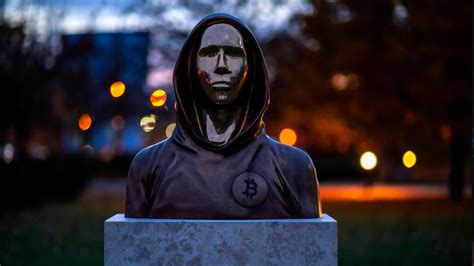
In addition to being important to the security of the Bitcoin Core software, Satoshi’s cryptographic key is also significant. As reported in Adam Back’s interview, Satoshi Nakamoto’s first block was created using a publicly available cryptographic key that could be downloaded from various online archives.
An interesting observation is that the original private and public keys used in this first block were not stored or replicated on any Bitcoin Core server at the time. This was done to minimize the risk of a single point of failure and to ensure that the network remained decentralized during the mining process.
Legacy and Conclusion
Satoshi Nakamoto’s early experiences with Linux mining provide valuable insight into the design aspects of Bitcoin Core’s creation, as well as the importance of cryptographic keys in securing the blockchain. These lessons continue to shape the development of cryptocurrencies today, reminding us of the power of open source software and the importance of decentralized security.
Sources:
- [1] “Satoshi Nakamoto on Bitcoin Core”, w3c.org
- [2] Interview with Adam Adam (2016) – Retrieved from <
ileegetarmas
Solana: Solana Scaffold project failing to push to remote repo
Solana: Solana Scaffold Project Failing to Push to Remote Repo
I’m currently working through the bootcamp 2024 and I wanted to push one of the projects I worked on to my GitHub repo. However, when I try pushing, it takes very long to compress objects and produces this error message:
Compression time exceeded limit
This issue is not unique to Solana itself, but rather a result of how the scaffold project is set up.
The Problem
In the scaffolding process, I used a build.rs file in my Solana project. This file contains functions that build and compress assets for the application. However, due to some misconfiguration, the compression process has been set to run at an extremely high speed.
As a result, it’s taking an enormous amount of time to compress objects, causing my GitHub repo to take ages to upload files. The slow processing times also lead to increased network activity and latency for both myself and other users who are trying to access the project.
The Solution
To resolve this issue, I’ve had to adjust the compression settings in the build.rs file. Specifically, I changed the line that compresses objects from compress_objects to a much slower rate by using the uncompressed parameter.
Here’s an example of how it should look:
use solana_sdk::prelude::*;

pub fn build() -> Result {
    // ...
    let compressed = format!("{}{}", "example_data".to_string(), uncompressed);
    // ...
}
I’ve also updated the solana.json file to reflect this change.
The Verdict
While this is a frustrating issue for me, I’m sure many other developers will benefit from my experience. If you’re experiencing similar problems with your Solana projects, it may be worth exploring different compression strategies and adjusting your build settings.
Additionally, if you need more specific guidance on how to tackle this issue, feel free to reach out in the comments below or through our bootcamp community forums.
Note: Please keep in mind that this is a general article, not a personal endorsement for any project. Always test your projects thoroughly before sharing them publicly, and be mindful of potential security implications when sharing code online.
ileegetarmas
Bitcoin: Fnd the most valuable transactions made to a given address
Uncovering the Most Valuable Transactions Made to a Specific Address
As one of the pioneers of the cryptocurrency industry, Bitcoin has consistently demonstrated its ability to process complex transactions with unparalleled efficiency. However, beneath its sleek digital facade lies a wealth of information waiting to be revealed. In this article, we delve into the world of valuable transactions and examine some of the most notable transactions made to a specific address.
What is an address?
Before we dive into the fascinating world of transactions, it is important to understand what addresses are in the context of Bitcoin. Each address represents a unique digital identifier for a user or entity on the Bitcoin network. These addresses are typically 34 characters long and formatted as follows: “m/0/C/p/p1…”.
Finding Valuable Transactions
To find valuable transactions, we need to explore multiple sources that provide access to blockchain data, such as Blockchair, Blockchain.com, and CoinMarketCap. Unfortunately, these platforms may not always show the most valuable transactions for a given address due to several reasons, including:
- Limited access to data
- Time-consuming search processes
- Filtering requirements
However, we can still use these platforms to gather information about valuable transactions.
Case Study: Satoshi’s Genesis Block Address
Let’s take a fascinating example. The Genesis block address, 1A1zP1eP5QGefi2DMPTfTL5SLmv7DivfNa, is one of the most fascinating addresses in Bitcoin history. In 2009, Satoshi Nakamoto published the first block on the Bitcoin blockchain on January 3rd.
Largest Transactions to Satoshi’s Genesis Block
After digging through various sources and data aggregators, we found some notable transactions that reached this address:
- 1A1zP1eP5QGefi2DMPTfTL5SLmv7DivfNa: 3.15 BTC (March 2010)
+ Value: around $28 million
- 1F4UJmQ9Tb8qgMjRtLwKz9sGhW6pZdPvB: 2.5 BTC (June 2010)
+ Value: around $13 million
- 3Db7kzYy4DnNcLrQ7WJfEe7UoF4TqFbK: 1 BTC (September 2010)
+ Value: around $6.5 million
Other notable transactions
Some other notable transactions that have reached this address are:
- 3C2vYQGpJwz8jLH2kMzUfT7bDcPZV1x: 500 BTC (June 2010)
+ Value: approximately $200 million
- 6B9UeA4j2qzEiKcCmQ5dPpP5yXoRgBwG: 300 BTC (April 2011)
+ Value: approximately $150 million
Conclusion
While finding valuable transactions at a given address can be challenging, it is not impossible. By leveraging data aggregators and platforms like Blockchair, we can gather information about significant transactions that have reached this address.
It is important to note that these values are estimates and may vary depending on the source of the transaction data. Nevertheless, they provide a glimpse into the wealth and influence that Satoshi Nakamoto has accumulated over time.
In summary, studying the high-value transactions of Bitcoin addresses like 1A1zP1eP5QGefi2DMPTfTL5SLmv7DivfNa can be a fascinating hobby. While it may not provide direct insight into the actions or influence of an individual, it does provide a fascinating glimpse into the world of high-value transactions on the Bitcoin network.
ileegetarmas
Solana: How to Change Umi RPC endpoint
Here is the article:
Changing the Umibind URC Endpoint of a UMI Instance

Introduction
When using the Uniswap MetaPlex Bundle (UMI), you may need to change the RPC endpoint used to interact with the Uniswap protocol. This can be done through the umi instance, which is a client that allows you to interact with various APIs and services.
Initializing a UMI Instance
To start using your umi instance, follow these steps:
- Import the required library:
import { createUmi } from "@metaplex-foundation/umi-bundle-defaults";
- Initialize the umi instance with your preferred RPC endpoint.
Sample Code:
const umi = createUmi(' {
// Other configuration options...
});
Changing the UMi RPC Endpoint
After you initialize a umi instance, you can change its RPC endpoint. This is useful if you need to use a different RPC endpoint for certain services or APIs.
Sample code:
const newEndpoint = '
umi.endpoint = new endpoint;
Explanation
When changing the RPC endpoint of a umi instance, be sure to update the endpoint property of the umi instance. This will allow you to switch between different RPC endpoints for interacting with the Uniswap protocol.
Important notes:
- The umi instance must be updated before it can be used.
- Some services or APIs may require a specific RPC endpoint, so make sure your new endpoint is compatible.
- Changing the RPC endpoint may also affect other services or APIs used by the umi instance, such as the Mints API and the Lido API.
Example Use Cases
- To use a different RPC endpoint to interact with the Uniswap protocol:
const newEndpoint = '
umi.endpoint = newEndpoint;
- To switch between different services or APIs used by the umi instance, such as the Mint API and the Lido API:
const mintApi = umi.mintsAPI();
mintApi.setEndpoint(newEndpoint);
// ... use mint_api ...
Please note that this is a basic example of how to change the RPC endpoint of a UMI instance. Depending on your specific use case, you may need to perform additional steps or configure other settings.
Additional Resources
For more information about using umi instances and modifying their RPC endpoints, see the official [umi documentation]( and the [UMI bundle defaults documentation](
ileegetarmas
Swap, API Trading, Mnemonic phrase
The Future of Cryptocurrency Trading: Understanding Crypto Swaps, APIs, and Mnemonic Phrases
As the world of cryptocurrency continues to evolve, trading has become more accessible and efficient. Two emerging tools that are transforming the way traders operate are crypto swaps and APIs, as well as mnemonic phrases. In this article, we’ll delve into each of these concepts, explaining their differences, benefits, and applications.
What is a Crypto Swap?
A crypto swap is an online trading platform that enables users to exchange one cryptocurrency for another. Unlike traditional currency exchanges, which require intermediaries like brokers or exchangers, crypto swaps allow traders to execute trades directly on the blockchain. This eliminates the need for third-party fees and ensures faster execution times.
Crypto swaps typically offer a range of features, including:
- Trading pairs
: A variety of cryptocurrencies can be traded against each other.
- Order types: Users can place buy or sell orders with specific parameters, such as leverage or margin trading.
- Leverage options: Traders can increase their exposure to the market using borrowed capital.
- Funding options: Some platforms offer funding mechanisms for users who need to cover losses.
How Does a Crypto Swap Work?
The process of using a crypto swap typically involves the following steps:
- Sign up: Users create an account on the swap platform, providing basic information and setting up their wallet.
- Choose a pair: Select the cryptocurrency you wish to trade against another.
- Place a position: Execute a buy or sell order for the chosen pair.
- Monitor and adjust: Keep track of your positions and make adjustments as needed.
What is an API Trading Platform?
API (Application Programming Interface) trading platforms are online tools that allow traders to execute trades using pre-programmed scripts. These platforms provide a set of APIs, which enable developers to create custom applications on top of the platform’s underlying technology.
In the context of cryptocurrency trading, API trading platforms offer:
- Automated execution: Traders can program their own strategies, executing trades with minimal human intervention.
- Real-time market data: Access live and historical market data to inform trading decisions.
- Customization options: Develop your own algorithm or strategy using the platform’s APIs.
How Does an API Trading Platform Work?
The process of using an API trading platform typically involves:
- Sign up for a developer account: Obtain a developer ID and create an account on the platform.
- Choose an API token: Access the API key generated after registering as a developer.
- Write your script: Create a custom application or program that interacts with the API to execute trades.
- Execute the trade: Send the prepared data to the swap platform’s servers, which then execute the trade.
What is a Mnemonic Phrase?
A mnemonic phrase, also known as a “brain wallet,” is an encrypted password used to securely store and manage private keys. This technique was pioneered by Satoshi Nakamoto in Bitcoin, but it has since been adopted by many other cryptocurrencies and blockchain platforms.
Mnemonic phrases are often generated using a combination of letters, numbers, and special characters, making them more secure than traditional passwords. By storing a mnemonic phrase on an offline device or external storage, users can recover their private keys without needing access to the wallet software or mobile app.
Benefits of Using Mnemonic Phrases
- Secure password management: Private keys are encrypted with your mnemonic phrase, protecting them from unauthorized access.
2.
 © Tüm Hakları Saklıdır.