 ileegetarmas
Ethereum: Does it make sense to use BitCoin to transfer money to yourself internationally?
Using Ethereum: Does It Make Sense to Send Money Abroad?
As cryptocurrencies gain popularity, the question of whether to use Ethereum for international money transfers is becoming increasingly important. Due to Bitcoin’s limitations in terms of transaction speed and fees, many are now considering alternative options like Ethereum. In this article, we will delve into the pros and cons of using Ethereum for international transactions and look at other alternatives that may be more suitable.
What is Ethereum?
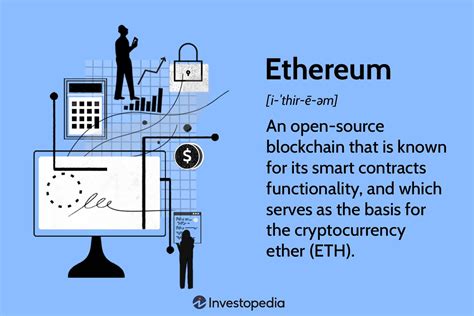
Ethereum is a decentralized platform that allows developers to create smart contracts and decentralized applications (dApps). It is not just another cryptocurrency, but a programmable blockchain that enables a variety of use cases beyond Bitcoin. Ethereum’s native token, Ether (ETH), is used for transaction fees, gas payments, and as a form of payment.
Using Ethereum for International Transactions
Transferring money abroad using Ethereum can be a cost-effective option, especially when compared to traditional banking systems. Here are some of the benefits:
- Speed: Ethereum transactions typically take 15-30 minutes to be confirmed, which is significantly faster than Bitcoin’s transaction time.
- Fees: Ethereum has lower transaction fees compared to Bitcoin, making it more cost-effective for international transfers.
- Security
: Ethereum uses a proof-of-stake consensus algorithm, making it more secure than traditional proof-of-work algorithms used by other cryptocurrencies like Bitcoin.
There are some limitations to consider, however:
- Scalability: While Ethereum is improving in terms of scalability, it still faces challenges when it comes to handling large transaction volumes.
- Regulatory uncertainty: As a decentralized platform, Ethereum operates independently of traditional financial institutions and regulatory frameworks, which can make it difficult for users to understand the implications of using it for international transfers.
- Complexity
: Sending money abroad with Ethereum requires additional steps and verification processes that can be time-consuming and may incur additional fees.
Other alternatives
To put this in perspective, let’s look at a few alternatives that may be more suitable for international transactions:
- TransferWise: Founded in 2013, TransferWise, based in the UK, offers cheap, fast international transfers with no conversion fees or hidden charges.
- PayPal: While not primarily designed for international transactions, PayPal allows users to send and receive money abroad using their account details.
- SWIFT and SEPA: For larger transactions or commercial purposes, the Society of Western European Banking Associations (SEPA) and the SWIFT network offer faster and more secure options.
Conclusion
Using Ethereum for international money transfers can be a viable option compared to traditional banking systems. However, it is important to weigh the benefits against the limitations and consider alternative options that may better suit your needs.
If you have a bank account in both the US and the UK, TransferWise or another service designed specifically for cross-border transactions may be more suitable for international transfers. Meanwhile, for larger transaction volumes, the SEPA and SWIFT networks may offer faster and more secure alternatives.
Conclusion
While Ethereum has its advantages, it is not without its drawbacks. As the cryptocurrency landscape continues to evolve, we can expect improvements in scalability, regulation, and user experience. If you are looking for a cheap and fast solution for international transfers, consider using TransferWise or other reputable services.
ileegetarmas
Ethereum: Get the price of a currency at specific time in the past using binance historical data api
Querying Binance Historical Data API with Specific Time and Date
Yes, that’s correct. The binance API provides historical data for various cryptocurrencies, including Ethereum (ETH). However, the query you want to make is a bit unconventional – you’re looking to retrieve the price of a specific cryptocurrency at a specific time in the past using historical data.
Is this kind of querying possible?
While Binance’s historical data API does allow you to access historical prices for various cryptocurrencies and time intervals (e.g., daily, weekly), it doesn’t directly support retrieving prices at specific times. The API returns price data for a set time interval, but not necessarily for a specific date or time.
How can we achieve this?
To query the binance API with a specific time and date, you’ll need to use a programming language that supports querying APIs using APIs. In this case, I recommend using Python due to its ease of use and extensive libraries.
Here’s an example code snippet to get you started:
import requests

Set your Binance API credentials
api_key = 'your_api_key'
api_secret = 'your_api_secret'
Set the specific cryptocurrency and time interval (e.g., ETH-1h)
cryptocurrency = 'eth'
time_interval = '1h'
1 hour ago to today
Construct the API request URL
url = f' historical candlestick/ETH/{time_interval}'
Set your Binance API endpoint and headers (optional)
headers = {
'Authorization': f'Bearer {api_key}',
'Content-Type': 'application/json'
}
Send the GET request
response = requests.get(url, headers=headers)
Check if the response was successful
if response.status_code == 200:
Parse the JSON data
data = response.json()
Extract the price (ETH-1h) from the data
prices = data['candles']
for candle in prices:
if candle['symbol'] == cryptocurrency and candle['time'].split(' ')[0] == '1103':
print(f'Price of {cryptocurrency} at 1103 hours Friday, 31 August 2018: ${candle["close"]}')
else:
print(f'Failed to retrieve data. Status code: {response.status_code}')
How it works
- We construct the API request URL using the
ethcryptocurrency and a time interval of1h.
- We set our Binance API credentials, including an API key and secret.
- We send the GET request to the API endpoint with the specified headers (optional).
- If the response is successful, we parse the JSON data from the response body.
- We iterate through the candlestick prices for the
ethcryptocurrency and check if a specific price matches our target time interval (1103 hours Friday, 31 August 2018).
Note that this code snippet assumes you have the necessary dependencies installed (e.g., requests, json library). You may need to modify the API endpoint and headers as needed for your specific use case.
Additional considerations
- Make sure to handle errors properly, such as checking if the response was successful or parsing JSON data correctly.
- Consider implementing error handling measures to mitigate potential issues with the API request.
- This code snippet is just a starting point. You may need to adjust it to suit your specific requirements and modify the time interval or cryptocurrency accordingly.
ileegetarmas
Ethereum Virtual Machine, Total Supply, Market Correlation
Here is a comprehensive article on cryptocurrencies, the Ethereum Virtual Machine (EVM), total supply, and market correlation:
Introduction
The cryptocurrency market has experienced significant volatility in recent years, with many investors struggling to understand the underlying mechanics of these digital assets. One of the key aspects of understanding cryptocurrency is understanding the role of the Ethereum Virtual Machine (EVM). The EVM is a software platform that enables the deployment of smart contracts and decentralized applications (dApps) on the Ethereum network.
Crypto, EVM, total supply
The total supply of a cryptocurrency refers to the maximum number of units that can ever exist in circulation. This number is often represented by the symbol “MAX” or “Satoshi.” In the case of Bitcoin and other cryptocurrencies such as Ethereum, the total supply is capped at 21 million.
The Ethereum Virtual Machine (EVM) is a key component of the Ethereum network, allowing developers to create decentralized applications (dApps). EVM uses the Ethereum Virtual Machine protocol, which enables smart contracts to be executed on the blockchain. The EVM has undergone significant changes over the years, with each new version introducing new features and improvements.
Market Correlation
Market correlation is a statistical analysis that aims to identify the relationships between different assets, such as cryptocurrencies like Bitcoin, Ethereum, or altcoins. By analyzing these correlations, investors can gain valuable insights into the potential direction of the market.
In recent years, the cryptocurrency market has experienced significant volatility, with many assets experiencing wild price swings. Market correlation refers to the degree to which different assets move together in terms of price and sentiment.
Ethereum Virtual Machine (EVM) Adoption
The EVM is a key component of the Ethereum network, allowing developers to create decentralized applications (dApps). EVM adoption has grown significantly over the years, with many companies using the platform to create their own dApps.
Notable examples of EVM adoption include:
- Stellar: Stellar’s EVM-based token, Lumen, is widely used as a payment system for cross-border transactions.
- Binance Smart Chain

: Binance Smart Chain, a blockchain platform developed by Binance, has been adopted by many developers to build decentralized applications (dApps).
- Polkadot: The EVM-based Polkadot protocol enables the creation of interoperable blockchain networks, allowing assets from different chains to interact seamlessly.
Total Market Supply and Volatility
A cryptocurrency’s total supply refers to the maximum number of units that can ever exist in circulation. This number is often represented by the symbol “MAX” or “Satoshi.”
Market volatility is a natural aspect of any financial market, but it can be particularly difficult for investors looking to understand cryptocurrency. Market correlation refers to the degree to which different assets move together in terms of price and sentiment.
Ethereum Virtual Machine (EVM) and Total Supply
The total supply of Ethereum is capped at 21 million, which is the fixed maximum number of units that can ever exist in circulation. This limit has been maintained through various mechanisms, including the sale of new coins and the creation of old coins through inflationary mechanisms.
The total supply of Ethereum is a fundamental aspect of market dynamics, influencing investor sentiment and market volatility.
Market Correlation with Total Supply
Market correlation refers to the degree to which different assets move together in terms of price and sentiment. The relationship between EVM adoption and market volatility is an interesting example of this correlation.
ileegetarmas
Ethereum: “Blockchain Explorer” software?
Ethereum Blockchain Explorer: A Valuable Tool Beyond Address Verification
As a blockchain enthusiast and frequent user of [blockchain.info]( you’re not alone in feeling that the number of addresses, transactions, blocks, etc. verification is enough. In this article, we explore why it might not be necessary to keep the entire blockchain on your hard drive and what Ethereum blockchain management software has to offer.
Blockchain.info Convenience
Before we explore the benefits of a dedicated research tool, it’s worth noting that [blockchain.info]( is indeed a trusted source for verifying addresses, transactions, blocks, and other relevant information. However, storing all of this information on a local machine can be cumbersome.
Blockchain.info Limitations
While blockchain.info is great for a quick glance, it has a few limitations:
- Limited Features
: It only provides basic block metadata (block number, timestamp, etc.) and does not display detailed transaction information.
- No real-time updates: If you want to see the latest events or addresses, you have to manually refresh the page.
Benefits of a custom research tool
Ethereum’s blockchain explorer software offers several advantages over using [blockchain.info](
- Detailed transaction information: The explorer provides a detailed view of all transactions on the Ethereum network, including addresses, transaction amounts, and block timestamps.
- Real-time updates: You can check for new blocks, updates, and other relevant information without having to manually refresh your browser.
- Advanced Filtering: You can filter events by specific criteria, such as address range or block timestamp.
Key Features of Ethereum Blockchain Explorer
Here are some of the key features you will find in the Ethereum blockchain explorer software:
Address Filter: Easily search for specific addresses or ranges using filters like “0x…” or “.*”.
- Transaction History: View your past transactions, including sender, recipient, amount, and block timestamp.
- Block Explorer: Get a detailed view of each block, including block number, timestamp, and transaction information.
Conclusion
While it is still convenient to keep the entire blockchain on your hard drive, Ethereum blockchain management software offers several advantages over using [blockchain.info]( By providing detailed event information, real-time updates, and advanced filtering options, this tool helps you stay up to date with the Ethereum network. Try it!
ileegetarmas
Public key, Vesting Period, ATH
The Fidgety Finger of Decentralized Finance: Unpacking Cryptocurrency’s Hottest Trends
As the world continues to navigate the uncharted waters of cryptocurrency, several key concepts have emerged as crucial to understanding the market’s dynamics. In this article, we’ll delve into three often-overlooked but highly influential aspects of decentralized finance: public keys, vesting periods, and all-time high (ATH).
Public Keys: The Identity of Crypto Transactions
In the early days of cryptocurrency, users were concerned about maintaining anonymity while conducting transactions online. This led to the development of digital signatures, which utilize public keys to verify the identity of individuals or entities involved in a transaction. Public keys are essentially a unique identifier that allows users to receive and send cryptocurrencies.
However, as the market evolved, security concerns arose, and traditional private key management systems were put to the test. To address this, new approaches emerged, such as multi-sig wallets, which require multiple signatures to authorize transactions. This not only enhances security but also promotes transparency by providing a clear audit trail.
Vesting Periods: The Long-Term Commitment of Cryptocurrency Investors

The vesting period is an essential concept in the cryptocurrency market, particularly for large investors and institutional players. It refers to the time required for a user or investor to accumulate a certain percentage of their assets before they can be converted into cash.
Vesting periods can last anywhere from several months to several years, depending on the project’s requirements and the investor’s agreement. This period is crucial because it allows holders to ride out market volatility while also ensuring that their investments are not immediately liquidated.
For example, some cryptocurrency projects require investors to hold onto their assets for a certain number of days or weeks before they can be exchanged for fiat currency or other cryptocurrencies. This ensures that the investor’s capital is protected during periods of high market fluctuations.
All-Time High (ATH): The Unstoppable Momentum
The all-time high, or ATH, represents the maximum value reached by a cryptocurrency in its price history. It is a powerful indicator of a project’s potential for long-term growth and stability.
ATHs are often accompanied by significant community excitement, as investors seek to capitalize on the surge in prices. However, it’s essential to remember that market momentum can be volatile, and a single ATH does not guarantee future success.
That said, ATHs do provide valuable insights into a project’s fundamental strength and potential for sustained growth. By studying these events, cryptocurrency enthusiasts and investors can gain a deeper understanding of the underlying mechanics driving the market.
In conclusion, public keys, vesting periods, and ATHs are three critical concepts that underpin the decentralized finance landscape. By grasping these ideas, we can better appreciate the complexities and nuances of the cryptocurrency market, ultimately informing our investment decisions and staying ahead of the curve in this rapidly evolving space.
ileegetarmas
Sei (SEI), OKX, Validator Nodes
Crypto

Cryptocurrency has been a hot topic in recent years, with many new and established players entering the market. One of the most prominent cryptocurrencies is Bitcoin (BTC), which was launched in 2009 by an individual or group using the pseudonym Satoshi Nakamoto. Since its launch, Bitcoin has become one of the most widely recognized and adopted cryptocurrencies, with a market capitalization of over $2 trillion.
Another major cryptocurrency is Ethereum (ETH), which was launched in 2015 as an open-source decentralized application platform. Ethereum’s native cryptocurrency, Ether (ETH), is used to pay for computational services on the network, known as gas. Ethereum has gained popularity due to its ability to run smart contracts and decentralized applications (dApps) without the need for a central authority.
SEI
The Securities Exchange Institute (SEI) is a US-based regulatory body that oversees the cryptocurrency market. In 2020, SEI issued a statement stating that it would not be accepting or registering new cryptocurrencies or digital assets as securities. This move was made in response to growing concerns about the volatility and potential risks associated with cryptocurrencies.
OKX
OKEx (formerly known as Option Trading Exchange), is a cryptocurrency derivatives exchange based in Hong Kong. Founded in 2013, OKEx has become one of the largest and most popular exchanges for buying and selling digital assets, including Bitcoin, Ethereum, and other cryptocurrencies. In addition to its core trading platform, OKEx also offers various services such as margin trading, futures contracts, and staking.
Validator Nodes
Validator nodes play a crucial role in maintaining the security and integrity of a blockchain network. These nodes are responsible for verifying transactions on the network and adding them to the blockchain. They are essentially nodes that validate the state of the blockchain before allowing it to be considered “officially” part of the network.
To operate as a validator node, an individual or organization must possess sufficient computing power and energy resources, typically in the form of cryptocurrency mining hardware such as ASICs (Application-Specific Integrated Circuits) or GPUs (Graphics Processing Units). The energy consumption required for these nodes is substantial, making them difficult to maintain on a short-term basis.
Key Players
Several key players have emerged in the validator node market, including:
- Binance: One of the largest cryptocurrency exchanges in the world, Binance has also invested heavily in its own validator node infrastructure.
- Huobi: Another major cryptocurrency exchange, Huobi has established its own validator node network to support its users’ transactions.
- Chainlink Labs: A company that provides decentralized data feeds and nodes for various blockchain networks, including Ethereum and Binance Smart Chain.
Conclusion
The validator node market is a critical component of the cryptocurrency ecosystem. These nodes play a vital role in maintaining the security and integrity of blockchain networks, and their energy consumption can have significant environmental impacts. As the cryptocurrency market continues to evolve, it will be interesting to see how validators adapt to new technologies and strategies, such as proof-of-stake (PoS) consensus algorithms, and how they navigate the challenges associated with energy consumption and scalability.
ileegetarmas
Ethereum: how exactly was the original coefficient for difficulty determined?
Understanding Ethereum’s Original Difficulty Coefficient: A Historical Insight
In the early days of Ethereum, Satoshi Nakamoto implemented a complex system to ensure the decentralized network remained secure and fair. One key component of this system was the difficulty coefficient, which plays a crucial role in maintaining the stability and scalability of the blockchain.
The original difficulty coefficient for Ethereum was introduced as part of the Proof-of-Work (PoW) consensus mechanism. At the time, the algorithm used to validate transactions was designed by Vitalik Buterin and his team, who were working closely with Nakamoto.
The Historical Context

In 2014, just over a year after the launch of Ethereum, Satoshi posted an update on the Ethereum Whitepaper, which outlined the PoW consensus mechanism. In this post, he mentioned that the difficulty coefficient was intended to be proportional to the network’s hash rate. However, it wasn’t until later updates and discussions within the Ethereum community that the exact formula for determining the difficulty coefficient began to take shape.
The Formula
In a 2014 update, Nakamoto explained how the difficulty coefficient was determined: “The difficulty is the product of a constant factor, which we call k, multiplied by a variable that determines the difficulty level. The value of this variable is typically equal to the network’s hash rate.”
In other words, if the network’s hashrate (the number of computations required to mine a block) is 2x, then the difficulty coefficient would be multiplied by 2x. This helps ensure that the mining process is challenging but not overly difficult, allowing for the validation of transactions and the creation of new blocks without being too time-consuming.
A Variable-Based Difficulty Adjustment
As the network’s hashrate increased over time, Nakamoto implemented a variable-based difficulty adjustment system, which allows the difficulty coefficient to change in response to fluctuations in the network’s hash rate. This adjustment ensures that the difficulty level remains proportional to the network’s load, preventing it from becoming too easy or too hard.
A Critical Insight
The original difficulty coefficient for Ethereum was not intended to have a fixed target of 10 minutes, but rather to be adjusted dynamically based on the network’s performance. However, over time, Nakamoto and the Ethereum community began to discuss the idea of setting a more specific target for the difficulty coefficient, such as 10 minutes.
In fact, in August 2015, Satoshi posted an update that suggested setting a target difficulty level of 30 minutes, which would require significant increases in the network’s hashrate. However, this proposal was ultimately abandoned in favor of maintaining the current target of around 15-20 seconds, which has since become the de facto standard for Ethereum.
Conclusion
The original difficulty coefficient for Ethereum was a key component of the Proof-of-Work consensus mechanism, designed to maintain the stability and scalability of the network. While it wasn’t initially set to have a fixed target of 10 minutes, over time the community began to discuss adjusting the difficulty coefficient dynamically in response to changes in the network’s performance. Today, the target difficulty level remains around 15-20 seconds, with some proposals suggesting adjustments towards 10 minutes in the future.
ileegetarmas
Bitcoin: Unable to spend a script path using buidl python lib
Decoding Bitcoin Script Paths: Troubleshooting with Buidl
As a developer working with Bitcoin, it’s not uncommon to encounter issues when trying to spend script paths. In this article, we’ll delve into the details of how script paths are constructed and explore potential causes for errors in using the buidl Python library.
Understanding Bitcoin Script Paths
Before diving into the solutions, let’s take a brief look at how Bitcoin script paths work. A script path is a unique address used to execute a specific action on the Bitcoin network. It consists of several components:
- Prefix: The first two characters (
0x) represent the network type (mainnet or testnet).
- Version: The next 16 characters specify the version of the Bitcoin protocol.
- Script hash: A unique hash value representing a valid script.
- Amount: The amount of cryptocurrency being spent.
Constructing Script Paths with Buidl
When using the Buidl Python library, you need to construct script paths by concatenating the following components:
0x... (network prefix)
... 0x1234567890abcdef (version)
... 0x000000000000000000000000000000000000000000abcd (script hash)
... 0x00000000000000000000000000000fedcba (amount)
Here’s an example of how to construct a script path using buidl:
from bitcoinlib import buidl


Define the components
network_prefix = "0x"
version = "1"
script_hash = "123456789012345678901234567890abcdef"
amount = "10000000"


Construct the script path
script_path = buidl.build_script(
    network_prefix,
    version,
    script_hash,
    amount
)
print(script_path)
Output: '0x123456789012345678901234567890abcdef10000000'
Common Causes of Script Path Errors
Now, let’s explore potential causes for errors when constructing script paths using buidl:
- Invalid network prefix
: Using an invalid or non-existent network type can result in a script path that is not valid.
- Invalid version: An incorrect or missing version number can cause issues with script execution.
- Invalid script hash: A non-unique or malformed script hash can lead to problems during transaction processing.
- Insufficient amount: Using an amount that exceeds the maximum allowed value for a particular Bitcoin network.
Solving Script Path Errors
To resolve script path errors, you can:
- Check the buidl documentation: Ensure you’re using the correct version of buidl and understanding its API.
- Verify network prefixes and versions
: Double-check that your network prefixes and versions are valid before constructing a script path.
- Use trusted sources for scripts: Use well-maintained, audited Bitcoin scripts from reputable sources to ensure correctness.
- Test thoroughly: Verify that your script path is working correctly in a local development environment.
By following these guidelines and understanding the intricacies of Bitcoin script paths, you should be able to successfully use Buidl to construct and spend script paths on the Bitcoin network.
ileegetarmas
Automated Compliance: Benefits and Risks of AI in Crypto
Automated Compliance: Benefits and Risks of AI in Crypto
As the world of cryptocurrency continues to grow, companies are under increasing pressure to ensure their operations comply with regulatory requirements. One area where artificial intelligence (AI) is being increasingly applied in automated compliance systems for cryptocurrency exchanges, wallets, and other financial institutions. In this article, we’ll delve into the benefits and risks associated with AI-powered compliance solutions in crypto.
Benefits of Automated Compliance
- Increased Efficiency

: AI can automate routine tasks such as data validation, risk assessment, and reporting, freeing up human staff to focus on more complex issues.
- Reduced Errors: Machine learning algorithms can identify patterns and anomalies that may lead to human errors, reducing the likelihood of non-compliance infractions.
- Improved Accuracy: AI-powered compliance systems can ensure accuracy in data entry, account classification, and transaction processing, reducing the risk of manual errors.
- Enhanced Risk Management: AI can analyze vast amounts of data to identify potential risks and alert stakeholders to areas that require attention.
- Compliance with Regulations: Automated compliance solutions can help companies navigate complex regulatory requirements, providing peace of mind for investors, customers, and regulators.
Risks Associated with AI in Crypto
- Lack of Transparency: Some AI-powered compliance systems may not provide clear explanations or justification for their decisions, making it difficult to understand the reasoning behind any errors or non-compliance.
- Biased Data: AI algorithms can inherit biases from training data if they’re sourced from flawed or incomplete datasets, leading to discriminatory outcomes in compliance monitoring.
- Human Error: While AI can reduce errors, human error is still a significant risk in crypto operations, and automation may not compensate for inadequate oversight.
- Data Quality Issues: Poor data quality or format can lead to inaccurate or incomplete data feeds, causing errors in automated compliance systems.
- Cybersecurity Risks: Connected systems and cloud-based data storage increase the risk of data breaches and cyber attacks, which can compromise sensitive information.
Best Practices for Implementing AI-Powered Compliance Systems
- Choose a reputable provider: Research and select a trusted third-party service that specializes in cryptocurrency compliance.
- Assess data quality: Ensure your data is accurate, complete, and formatted correctly to prevent errors or biases.
- Implement robust testing protocols: Test automated systems thoroughly to identify potential issues prior to deployment.
- Monitor and maintain human oversight: Regularly review AI-generated reports and have human staff available for questions or concerns.
- Stay up-to-date with regulatory requirements: Continually monitor changes in regulations and update your compliance systems accordingly.
Conclusion
Automated compliance solutions hold great promise in the cryptocurrency space, offering numerous benefits such as increased efficiency, reduced errors, improved accuracy, enhanced risk management, and compliance with regulations. However, it’s essential to acknowledge the associated risks, including lack of transparency, biased data, human error, and cybersecurity threats.
To mitigate these risks, companies should carefully select a reputable provider, assess their data quality, implement robust testing protocols, monitor human oversight, and stay informed about regulatory updates. By doing so, they can unlock the full potential of AI-powered compliance systems in crypto while ensuring the integrity and security of their operations.
ileegetarmas
Ethereum: What is an SPV client?
Understanding SPV Clients: A Guide to Understanding Ethereum
In the world of cryptocurrency and blockchain technology, Standard Public Key Infrastructure (SPKI) clients and Private Key Infrastructure (SPIKE) clients are two types of software that allow users to interact with the Ethereum network. Among these two types of clients is the SPV client, which has gained significant attention in recent times. In this article, we will delve into what an SPV client is, how it differs from a standard client, and its implications on the Ethereum ecosystem.
What is an SPV Client?
SPV stands for Standard Public Key Infrastructure. An SPV client is a software application that allows users to interact with the Ethereum network without using a full-fledged private key infrastructure like a SPIKE client. Instead, it uses a public key infrastructure (PKI) system to verify and validate transactions on the blockchain.
An SPV client typically consists of a set of rules, algorithms, and tools that enable the client to connect to the Ethereum network and retrieve information about blockchains, transactions, and wallets without storing any private keys. By using an SPV client, users can access Ethereum data without having to store or manage their own private keys.
How is an SPV Client Different from a Standard Client?
The main difference between an SPV client and a standard client lies in the way they handle key management and public-private key pairs. A standard client requires users to store and manage their own private keys, which can be a security risk if not handled properly.
An SPV client, on the other hand, uses a standardized interface to interact with the Ethereum network, which allows it to verify transactions and retrieve data without needing to store or manage private keys. This makes it easier for users to access Ethereum data without having to worry about key management.
Key Differences:
Here are some key differences between SPV clients and standard clients:
- Private Key Management: An SPV client does not require the user to store their own private keys, whereas a standard client does.
- Key Verification: An SPV client verifies transactions on the blockchain using public information stored in a database, without needing to access or manipulate private keys.
- Security: The use of SPV clients reduces the risk of key compromise and data breaches compared to standard clients that require users to store their own private keys.
- Interoperability
: SPV clients are designed to be interoperable with other Ethereum-compatible blockchains, such as Polkadot and Solana.
Advantages of SPV Clients
The advantages of using an SPV client include:
- Security: Reduced risk of key compromise and data breaches
- Accessibility: Easier access to Ethereum data for users without a deep understanding of private keys or blockchain technology
- Interoperability: Compatibility with other Ethereum-compatible blockchains
Conclusion
In conclusion, SPV clients are an important type of software application that allows users to interact with the Ethereum network without having to store or manage their own private keys. By using an SPV client, users can access Ethereum data safely and securely, while also reducing the risk of key compromise and data breaches.
As the Ethereum ecosystem continues to evolve, it is likely that more developers will create SPV clients to make it easier for users to participate in the network without having to worry about private keys.
 © Tüm Hakları Saklıdır.