 ileegetarmas
Price Volatility, Wallet address, Cross chain
Here is a draft article based on your request:
“Times of Volatility in the Crypto Market: What You Need to Know About Wallet Addresses and Cross-Chain Solutions”
As the world of cryptocurrencies grows in popularity, so does the risk of price volatility. With prices changing rapidly across exchanges, investors need to be cautious and prepared for any eventuality. In this article, we will delve into the world of crypto wallet addresses, cross-chain solutions, and what you need to know to navigate these complex systems.
Wallet Addresses: The Key to Security
A wallet address is a unique string of characters that serves as your digital identity in the cryptocurrency ecosystem. It is important to choose a strong and secure wallet address for each cryptocurrency, as it will be used to receive payments, transfer funds, and store your assets.
When choosing a wallet address, look for something that:
- Is randomly generated
- Contains a mix of upper and lower case letters
- Does not include personal or sensitive information (e.g. names, birthdays)
- Has a unique prefix or suffix (known in some wallets as a “keystore”)
Some popular cryptocurrency platforms offer built-in wallet address generators to make it easy to create secure addresses. However, manual setup is still an option for more advanced users.
Cross-chain Solutions: A Bridge Between Worlds
As cryptocurrencies become more popular, the need for seamless interactions between different blockchain ecosystems has become increasingly important. Cross-chain solutions allow assets to be transferred across multiple networks, ensuring the security and accessibility of your digital wealth.
Some popular cross-chain solutions include:
- Ropsten Bridge: A bridge that connects Ethereum (ERC-20) to other blockchains, allowing users to transfer funds between chains.
- Kusama Network: A testnet for Polkadot, enabling the creation of interoperable decentralized applications across blockchains.
- Binance Smart Chain (BSC): An independent blockchain network that enables seamless interaction with other Binance-based platforms.
When choosing a cross-chain solution, factors to consider include:
- Network compatibility
- Transfer speeds
- Fees and processing times
Conclusion
In summary, understanding wallet addresses and cross-chain solutions is crucial in today’s volatile cryptocurrency market. By taking the necessary precautions to secure your digital identity and exploring reputable cross-chain solutions, you will be better equipped to navigate the complex landscape of cryptocurrency investing.
Remember, always exercise caution when investing in cryptocurrencies and never invest more than you can afford to lose. Stay up to date, stay alert and happy investing!
ileegetarmas
IDO, 2FA, Market Research
“Demolition of Cryptocurrency Investments: Deep Diving to IDO, 2FA and Market Survey”
In recent years, the world of cryptocurrency has experienced unprecedented growth, and thousands of new coins have been born daily on online exchange. As a result, investors have lodged into these digital property in search of a high return. However, navigating the complex landscape of cryptocurrency investments can be scary, even for the most experienced merchants.
One of the central part of the cryptocurrency trading is the original direct investment process (IDO). Ido platforms allow developers and companies to raise funds from many investors through a unique online application process. This approach has gained popularity among encryption technology enthusiasts who see it as an innovative way of getting funding for their projects without having to navigate traditional venture capital investments.
However, not all cryptocurrency investments are trusted equally. In fact, the safety of property is of paramount importance. It becomes a two-factor authentication (2FA) solving feature that increases the extra protection of hacking and information network attacks. 2FA systems require users to supply their password not only for their password but also another form of certification, such as a code sent to the phone or biometric scan.
So how can you make aware of investment decisions about cryptocurrency? Market research is an essential tool in this regard. By studying the trends and models of the encryption market, investors can gain valuable views on possible price changes and identify undervalued funds before other merchants are very sought after.
One of the key meter in viewing is the Cryptocurrency market value (market ceiling), which represents the total value of all remaining coins. A higher market ceiling often demonstrates a more stable and established company, while lower markets can be a sign of increased volatility.
In addition, it is necessary to diversify your portfolio by spreading investments between different assets and cryptocurrencies. This approach minimizes risk and increases potential returns.
In summary, the world of cryptocurrency investing is complex and diverse. By understanding the basics of IDO, 2FA and market research, investors can make conscious decisions that help them navigate in this exciting but often unpredictable landscape. As the cryptocurrency market continues to evolve, it is imperative that investors will remain up-to-date with the latest development and trends, so why not start deepening these critical aspects of digital investment?
ileegetarmas
Ethereum: What are ASIC miners actually doing?
Ethereum: revealing the role of Asic miners in Blockchain
As a newcomer in the world of cryptocurrency, it is natural to have questions about how mining on Ethereum’s blockchain works. A crucial aspect is the role of the specific integrated circuits of the application (ASIC). In this article, we will deepen the world of mining asic and explore what they are really doing.
What are Asic miners?
Asic miners are specialized computers chips designed specifically for cryptocurrency mining. They are used to validate transactions on the Ethereum blockchain by solving complex mathematical problems, which require immense computational power. The best known example of an Asic miner is the Nvidia GPU, but other companies such as Bitmain and Avalung also produce their Asics.
How do ASIC miners work?
When it comes to mining on Ethereum, the process involves several key components:
- PROOF-OF-WORK (POW)
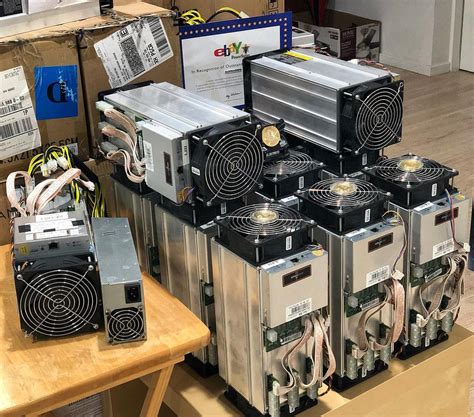
: The Ethereum network uses a consent algorithm called proof of-work (power) to validate transactions and create new blocks. Miners compete to solve a complex mathematical puzzle, which requires significant computational power.
- Hash functions: the puzzle solution is based on cryptographic hash functions such as SHA-256 or Keccak-256. These functions take input data and produce a unique digital imprint.
- Miner’s hardware : Asic miners are designed specifically for Ethereum mining. They are generally tailor -made hardware that consists of several GPUs, which work together to resolve the mathematical puzzle.
What are Asic miners doing?
In essence, Asic miners are doing several things:
- Resolution of the mathematical puzzles : the miner’s hardware resolves the mathematical puzzle complex by feeding it a large amount of computational power.
- Digital fingerprint production : the hash function produces a unique digital imprint (or hash) which represents the input data and the solution to the puzzle.
- validation transactions : the resulting hash is used as a “test” that the miner has solved the mathematical puzzle, which in turn verifies transactions on the Ethereum blockchain.
Why do we need Asic miners?
The demand for Asic miners has increased prices, making them more accessible to individual users and companies. Without Asic, it would be much more difficult for miners to compete with each other, leading to a decrease in mining speeds and costs.
On the contrary, traditional GPU miners are often more suitable for cryptocurrency mining on a reduced scale such as Bitcoin or Litecoin. However, they are not optimized for the only Ethereum Pow algorithm, which requires more computational power than the hardware can provide.
Conclusion
Asic miners play a vital role in maintaining the safety and stability of Ethereum’s blockchain. Their ability to solve complex mathematical enigmas using specialized hardware has allowed the development of a decentralized network resistant to censorship and censorship.
By understanding how the Asic work, you will get a deeper appreciation for the underlying technology that feeds the cryptocurrency market. If you are interested in exploring more on the Ethereum or Bitcoin mining, be sure to control the minimum miner Bitcoin Github repository, which is an excellent resource to learn more about the technical aspects of the development of Blockchain.
ileegetarmas
Ethereum: Is the WalletConnect supporting the “Binance Smart Chain (BEP20)” wallets?
Walletconnect support for Bep20 wallets in Ethereum: a detailed analysis
As a Kotlin WalletConnect user, it is likely to be familiar with its perfect integration with different blockchain platforms. However, you could ask yourself if this wallet is also compatible with the ecosystem of the Binance intelligent chain (BEP20). In this article, we will deepen if WalletConnect supports bep20 wallets in Ethereum and what it means for users like you.
What are bep20 wallets?
Before immersing ourselves, we quickly define what Bep20 is. Bep20 is a type of token that uses the Binance Smart Chain (BEP20) network to archive, transfer and exchange token. A differenza dei tradizionali token ERC-20 in Ethereum (Ethereum), che utilizzano la macchina Ethereum Virtual (EVM), i token BEP20 sono specificamente progettati per la catena intelligente di binance.
Ecosystems WalletConnect and Blockchain
WalletConnect is a popular portfolio protocol that allows users to secure their wallets to different blockchain platforms, including Ethereum, Polkadot, Solana and others. The protocol uses the web3.js library in Javascript to establish safe connections between wallets and blockchains.
Walletconnect support for Binance Smart Chain (bep20)
To answer your question, WalletConnect supports Bep20 wallets in the Binance intelligent chain. In fact, this integration is a significant step for users who wish to use Kotlin WalletConnect with their Ethereum and Binance Smart Chain token Bep20.
Advantages of the use of WalletConnect with bep20
The use of walletconnect with bep20 wallets offers several advantages:
* Convenience : With WalletConnect, you can easily connect your Bep20 portfolio to the Kotlin WalletConnect application, allowing transactions without problems between the platforms.
* Decentralized exchange integration (Dex)
: you can use WalletConnect on multiple blockchain platforms, including the intelligent Binance, Solana and others chain, which facilitates the exchange of token in different ecosystems.
* Interoperability of the intelligent contract
: When using WalletConnects with Bep20 wallets, you can access integrated integrated contracts in Ethereum EVM, such as the ERC-20 token, and interact directly with them.
What does this mean for users?
As a Kotlin WalletConnect user, if you have a Binance Smart Chain (bep20) wallet, it should be able to:
- Connect your bep20 wallet to the application
- FAI TRANSATIONS Between Ethereum and Binance Smart Chain Platforms
- Access intelligent contracts based on both blockchain platforms
In summary, Walletconnect admits Binance Smart Chain Wallets (BEP20), offering a comfortable and decentralized form of interaction with token in multiple blockchain ecosystems.
Conclusion
WalletConnect is a robust portfolio protocol that offers a perfect integration experience for users on different blockchain platforms. The support for Bep20 portfolios in Ethereum is a significant addition, which makes it easier for users to exchange and manage their tokens in Ethereum and Binance Smart Chain. Whether you are trying to expand the token portfolio or to explore the trade of categories, it is certainly worth considering WalletConnect.
ileegetarmas
Futures, Peer-to-Peer Trading, Non-Fungible Asset
“A child’s navigation west of the crypto currency: guide for cryptocurrencies, future and P2P trading in era of NFTS”
**
The world of the crypto currency exploded into a huge and complex landscape, and more players are fighting for dominance on the market. Basically, the Crypto currency is designed to trade a peer between individuals holding or transmitted digital assets, such as cryptocurrencies, token and other decentralized securities. In this article, we will investigate the various types of contracts that govern these trade: Crypto Futures, Peer-to-Peer Tradition and the non-stunning (NFTS).
CRYPTO Futures
Crypto futures contracts are for delivery of a certain amount of fundamental assets, such as Bitcoin or Ethereum, at a predetermined price of a particular date in the future. These contracts are traded on a regulated exchange, such as CME (Chicago Mercantile Exchange) Bitcoin Futures, and offer traders that affect increasing their potential gains. Crypto Futures provides an effective way to invest the institutional investors and individuals of high values in the crypto currency with a lower minimum investment threshold from traditional trade platforms.
Peter trading
Reference trading peers to direct asset exchange between individuals without passing through a centralized exchange or broker. This type of trading is facilitated by specialized platforms, such as Robinhood (for shares) and Etoro (for cryptocurrency currency), which allow users to buy property and sell property with each other. Trafficking in peers removes mediators, reducing costs and increasing liquidity. However, it also introduces new risks, such as potential losses due to the volatility of the market or manipulation.
necessary assets (NFTS)
Non -bothering assets are unique digital items that cannot be replaced for their identical colleagues. NFTs are often used to present ownership of digital art, collector and other unique digital content. Unlike the CRIPTO currency, which can be easily transferred from one address to another, NFTS requires a separate record of blockchain to check ownership. This feature makes them safer and more valuable than traditional property.
Complexity Navigation
Although the Crypto currency has crossed the long way in recent years, the movement in markets that have been challenging due to factors such as regulatory uncertainty, the volatility of the market and intense competition. In order to succeed in this space, traders must be informed about market trends, implying the terminology of the contract and adapt to changing regulations. In addition, establishing trust between the parties is crucial to successfully trading peers.
In conclusion, cryptocurrency, cryptocurrency of the future, and the non-stunning that represent quickly developing the landscape of decentralized securities. Since the market is still maturing, it is crucial that merchants remain awake, informed and adaptable to navigation on these complex contracts. By understanding the unique characteristics of each asset class, traders can make informed decisions and increase their chances of success in this child west of the crypto -val.
A statement of the renunciation of responsibility:
This article is only for informative purposes and should not be considered as an investment advice. Cryptocurrency markets are very speculative and have inherent risks. Always conduct a thorough research before investing in any property.
ileegetarmas
Public Sale, Isolated Margin, Perpetual
Here is a comprehensive article on three types of encryption stores you mentioned:
Title: Platform Testing for Crypto Trade: Review of Cryptum Exchange, Insulated Markets and Eternal Markets
Introduction
The world of crypto currency has experienced rapid growth in recent years because new exchange and markets are constantly increasing. In this article we deepen three types of cryptocurrency environments: public sale, isolated margin and eternal. Each platform offers unique features and advantages for merchants, investors and participants in the market.
Public Exchange Sales
Public exchanging sales is a type of cryptocurrency market where customers can buy the latest crypto currencies for FIAT currency or other encryption technology. These exchange often supports well -known companies or organizations and have strict instructions on lists. Some popular public stock exchanges include:
* Binance
: One of the largest and most common exchanges of public sales, which offers more than 500 cryptocurrencies.
* Huobi : A visible exchange with large user stocks and extensive listing fees.
* Bitfinex : Fast exchange known for low fees and competitive conditions.
isolated margin exchange
An isolated marginal exchange is a type of trading cryptocurrencies that also offers a crypto currency and fiat currency and margins. These stock markets allow traders to buy or sell crypto currency with the ability to borrow additional funds from Exchange vault. Changes in isolated margins usually have lower payments than traditional exchange, making them attractive merchants who want to use their deposits.
Some popular isolated marginal capabilities include:
* Bitmex : Pioneer on isolated margins that offers a choice of pairs to encryption and competitive expressions.
* Kken : A well -established exchange that also offers both crypto currencies and FIAT currency pairs and margin trade.
* SAXO BANK : Switzerland Bank that provides an integrated platform for encryption trading with individual margins.
A continuous market
A continuous market is a type of cryptocurrency option in which traders can buy or sell crypto currencies without the need for fixed prices. These stock markets use algorithms to automatically adjust prices based on market conditions, which eliminates the need for a person’s deficiency. The market is often used by large institutional investors and traders who want to effectively manage their position.
Some popular eternal markets are:
* Bitmex : known for speed speed and competitive expressions.
* Huobi : offers numerous eternal markets with low payments and high liquidity.
* SAXO BANK : provides an integrated trading system by encrypting with eternal markets and other financial instruments.
Conclusion
In short, the world of curine currency trade is constantly developing and new exchange is regularly created. Understanding the differences between public sales, isolated margins and eternal markets can help traders, investors and market parties make a conscious decision on the platform used. Whether you are an experienced merchant or just starting, you need to explore and choose a platform that meets your needs and offers the features and benefits you want.
Other resources
* Exchange panels: From the comprehensive list of cryptocurrencies, including public sale, isolated margin and eternal market, visit [www.exchangeplatforms.io] (
* CRYPTO Resources: For more information about cryptocurrency strategies, market analysis tools and training resources, visit websites such as [www.crypto.com] ( or [www) . Traditionview.com] (
ileegetarmas
The Role of AI in Smart Contract Dispute Resolution
The Role of Artificial Intelligence (AI) in Smart Contract Dispute Resolution
In recent years, the use of smart contracts has become increasingly popular as a means to automate and streamline various business processes. However, one area where artificial intelligence (AI) plays a crucial role is in dispute resolution within the context of smart contract agreements. In this article, we will explore the potential benefits and limitations of AI in resolving disputes related to smart contracts.
What are Smart Contracts?
Smart contracts are self-executing contracts with the terms of the agreement written directly into lines of code. They use blockchain technology to create a secure, transparent, and tamper-proof record of agreements. Once executed, smart contracts can automate various business processes such as payment, ownership transfer, and asset distribution.
AI in Smart Contract Dispute Resolution

Artificial intelligence has several key characteristics that make it well-suited for dispute resolution in the context of smart contracts:
- Scalability: AI can process vast amounts of data in real-time, making it an ideal solution for large-scale disputes.
- Objectivity: AI systems can analyze complex data without human bias or emotional influences.
- Consistency: AI can ensure that all parties to the dispute agree on the terms and conditions.
- Flexibility: AI can adapt to changing circumstances and new information.
Benefits of AI in Smart Contract Dispute Resolution
The use of AI in smart contract dispute resolution offers several benefits:
- Improved Efficiency: AI can automate manual processes, reducing the time and cost associated with dispute resolution.
- Increased Accuracy: AI systems can analyze large amounts of data to identify inconsistencies or errors that may not be apparent to human reviewers.
- Enhanced Objectivity: AI can reduce the influence of personal biases and emotions, leading to more objective decision-making.
Limitations of AI in Smart Contract Dispute Resolution
While AI has several advantages, it also has some limitations:
- Data Quality: AI requires high-quality data to make accurate decisions. However, smart contracts are often built on complex systems with varying levels of accuracy.
- Contextual Understanding: AI may struggle to understand the nuances and complexities of human language and behavior.
- Interpretability: AI decision-making processes can be opaque, making it challenging for humans to interpret the reasoning behind a particular outcome.
Real-World Applications
AI is already being used in various aspects of smart contract dispute resolution:
- Automated Dispute Resolution Platforms: Companies like Matic and Chain are developing platforms that use AI to automate disputes between parties.
- Smart Contract Validation: AI-powered tools can validate the correctness and consistency of smart contracts, reducing the risk of errors or inconsistencies.
Conclusion
The role of AI in smart contract dispute resolution is multifaceted and increasing. While AI offers several advantages, including scalability, objectivity, and flexibility, it also has some limitations that must be addressed. As the use of smart contracts continues to grow, it is likely that AI will play an increasingly important role in resolving disputes related to these agreements.
Recommendations
To harness the potential benefits of AI in smart contract dispute resolution:
- Invest in AI-Powered Dispute Resolution Tools
: Develop and deploy AI-powered platforms that can automate disputes between parties.
- Develop Scalable and Interoperable AI Systems: Ensure that AI systems are designed to work seamlessly across different platforms and networks.
3.
ileegetarmas
Consensus Mechanism, PoW, Layer 2 Scaling
Here is an article about crypto consensus mechanisms, proof of work (PoW), and layer 2 scaling:
“Proof of Work, Consensus, Scalability: A Guide to Crypto’s Most Powerful Tools”
The world of cryptocurrency has come a long way since the launch of Bitcoin in 2009. One of the most significant advancements in this space is the development of crypto consensus mechanisms, proof of work (PoW), and layer 2 scaling solutions that have enabled faster, cheaper, and more scalable transactions. In this article, we’ll delve into these critical tools and explore how they’ve transformed the cryptocurrency landscape.
Proof of Work (PoW)
Proof of Work is a consensus mechanism that requires miners to solve complex mathematical puzzles to validate transactions on the blockchain. This process involves significant computational power, energy consumption, and environmental impact. PoW was first introduced by Bitcoin as a way to secure the network and verify transactions.
While PoW has its drawbacks, including high energy costs and environmental concerns, it has also enabled the creation of decentralized finance (DeFi) applications, non-fungible tokens (NFTs), and decentralized lending protocols like MakerDAO. These innovations have expanded the use cases for cryptocurrency beyond mere currency exchange and have created new opportunities for businesses to grow.
Consensus Mechanisms
Several consensus mechanisms have been developed to improve the scalability, security, and sustainability of blockchain networks. Some of the most notable ones include:
- Proof of Stake (PoS): In PoS, validators are chosen based on the amount of cryptocurrency they hold rather than their computational power. This mechanism is more energy-efficient and reduces the likelihood of a single individual holding an excessive amount of coins.
- Delegated Proof of Stake (DPoS): DPoS is similar to PoS but allows multiple validators to participate in the validation process. This leads to more decentralized decision-making and reduced centralization.
- Sharding: Sharding involves dividing the blockchain into smaller, parallel chains or “shards.” Each shard can operate independently, allowing for increased scalability and reduced congestion on the network.
Layer 2 Scaling Solutions
To address the congestion and high fees associated with traditional blockchain networks, layer 2 scaling solutions have emerged as a game-changer. Some of these solutions include:
- Optimism: Optimism is a layer 2 scaling solution that uses a novel consensus mechanism called Delegated Proof of Stake (DPoS) to validate transactions. This process reduces the computational power required for validation, making it more energy-efficient and reducing congestion.
- Polkadot (Kusama): Polkadot is an interoperability platform that enables seamless communication between different blockchain networks. This allows for the creation of decentralized applications (dApps) that can interact with multiple blockchains without the need for complex integration processes.
- Cosmos: Cosmos is a suite of interoperable blockchains, including Interblock and Tendermint, designed to provide high scalability and low fees. The network’s consensus mechanism, Proof of Stake (PoS), allows validators to participate in the validation process based on their stake.
Conclusion
The development of crypto consensus mechanisms, PoW, and layer 2 scaling solutions has enabled cryptocurrency to grow from a niche technology into a mainstream phenomenon. While these innovations come with their own set of challenges, they have also opened up new opportunities for businesses, applications, and individuals alike. As the cryptocurrency landscape continues to evolve, it’s essential to stay informed about the latest developments in these critical tools and how they’re shaping the future of decentralized finance.
ileegetarmas
Ethereum: Reserved Bitcoin address for examples?
Reserved Bitcoin Address: Standardization Symbol
One of the main concepts in the cryptocurrency in the world is the use of reserved addresses. These addresses are not intended for operations or bitcoins, but are a standard reference point for developers, documentation purposes and educational examples.
The Bitcoin protocol describes the reserved address as an address that cannot be used for any operation or bitcoins. However, it remains syntactically justified, allowing the developers to use it as a local reservoir for their code or for demonstration purposes.
Why reserved addresses are useful
Reserved addresses have several benefits:
* Standardization
: They promote standardization by providing a total reference point in various programs and platforms.
* Documentation : They are an example of how to work with reserved addresses, making it easier to understand and use them in the code.
* Education goals : They can be used to demonstrate the concept of reserved addresses without actually using their operations or bitcoins.
Examples and use cases
Here are some examples of how reserved addresses can be used:
* Documentation : The developer can create a reserved address, such as 0x1234567890abcdef as an example of how to use it in their code.
* Testing : They could use a reserved address, such as 0x000000000000000000000000000000000000000000000000 for test purposes, for example, to confirm the behavior of certain algorithms or functions.
* Research and Improvement : Researchers can create reserved addresses such as “0x987654321098765432109876543210987654321098765432109876543210` to model specific cases of use or check new ideas without RISCOCOINS.
Conclusion
Bitcoin addresses are a useful tool for developers, documentation purposes and educational examples. Using these addresses, syntactically valid but not used for surgery or receiving bitcoins, we can promote standardization, education and testing in the cryptocurrency community.
ileegetarmas
How to Keep Your Large Cryptocurrency Transactions Private
How to keep your large cryptomenic transactions private
The increasing popularity of cryptocurrency has brought a new level of anonymity and comfort for online transactions. However, this increased privacy comes with some alerts. Large cryptocurrency transactions can be easily monitored by a blockchain network or exchange network, potentially exposing sensitive information such as wallet balances, quantities of transactions and recipient identity.
In this article, we will examine the ways to keep your large cryptomen transactions private and safe.
Why do you need to protect large cryptomenic transactions
Large transactions include a significant amount of data that can be easily monitored by blockchain or exchanges. These data contain:
* Wallet balances : Your current balance in different cryptomisen.
* Sums of transaction : Total value of all transactions made with your wallet.
* recipient’s identity
: names, addresses and other identification information of individuals or subjects that receive funds.
When a large transaction is carried out, it is possible for exchanges, wallets or other parties to monitor the movement of funds. This can lead to:
* hacking wallets : Hackers can get access to your wallet data, allowing them to steal your resources.
* Exchanges and charges : Exchanges may charge you exaggerated fees for large transactions, increasing your total cost.
* Tax consequences : Large transactions can trigger tax audits that can lead to fines and fines.
Ways to keep your large cryptomenic transactions private
Fortunately, there are several methods to protect your private large cryptomen transactions:
1.
Use a safe wallet
Choose a reputable wallet provider that offers robust security features, for example:
* Multifactor authentication : Add another security layer to require two or more forms of verification.
* Evidence with zero knowledge : Use wallets that implement zero knowledge evidence to ensure the confidentiality of your transactions.
* Private keys : Save your private keys safely using a hardware wallet or paper wallet.
2.
Allow transaction limits
Set the transaction limits on exchanges and wallets to limit the amount of funds available for large transactions:
* Exchanges : Set the transaction limits on each exchange, such as Coinbase or Binance.
* Purses : Use wallets that offer automatic transaction limits or set them manually.
3.
Use cold storage
Save your cryptocurrencies in the cold storage, outside the Internet and any potential hacking attempts:
* Hardware wallets : Store the hardware -like cryptocurrency in mode, such as a book, safe or keepkey.
* Wallets of paper : Create paper wallets to safely store your private keys.
4.
Use private transactions
Use private transaction methods such as P2P transactions (peer-to-peer):
* Private exchanges : Use private exchanges that do not require KYC verification (know your customer).
* PEER-to-Peer Message Applications: Use Applications to send Message Peer-to-Peer, such as Telegram or Discord, to send funds.
5.
Monitor your account activity
Check your account activity regularly and investigate any suspicious transactions:
* Tracking of transactions : Follow all transactions made on your wallet.
* Alerts : Set notifications to unusual transaction patterns or large transactions.
6.
Use safe communication channels
Use safe communication channels to protect your online communication, such as Tor or VPNS:
* Tor

: Use Tor network to access exchanges and wallets cryptocurrencies without revealing your IP address.
* VPN : Use a virtual private network (VPN) to encrypt the Internet.
7.
 © Tüm Hakları Saklıdır.